Kindle Serials (Part Three)

This is part three of a three part series. The series begins here.

There’s been a certain level of excitement about Amazon’s Kindle Serials announcement, including articles like this one from Jason Allen Ashlock on Digital Book World (in which, by the way, Moveable Type is announcing a serial of its own).

But, like the serial GAMELAND that we spoke of in Part Two, in reality,  there are already many popular serials being published on Amazon–they are just being published one episode at a time: Look at Hugh Howey’s  Wool or Sean Platt and David Wright’s Yesterday’s Gone. Prices for the episodes usually range from 99 cents to $2.99 each and occasionally, even free. Generally, when these series are complete, they are published in either an omnibus edition or a boxed set.

But for the new Kindle Serials, Amazon is only charging $1.99 for the entire series! Right now, no one knows whether that  price point is only an introductory offer or a vision for the future.. In his article “Kindle’s Serial Killer,” writer Mike Cane viewpoint is that “Bezos has just lowered the floor for eBook prices again.” His advice to writers is to “pass on this.”

Kate Sullivan of Candlemark & Gleam notes:

It looks like the current Kindle Serials available are $1.99, which seems to be a standard Amazon tactic – it’s sort of a loss-leader, positioned exactly at the novel-selling sweet spot these days. From that point of view, it’s a great price – it’s cheap enough to make people willing to take the risk on an unknown author and/or a format they’re not familiar with. From the point of view of someone who likes to see creative types paid a fair wage for their work, though, I really despise the 99c and $1.99 price points for full novels. We charge $5 for a basic serial, with additional content and rewards available at other tier price points, and I think that’s fair. But promotional pricing can be anything you want, and I’m going to look at the current $1.99 pricing on the Kindle Serials as just that – a way to get market penetration through encouraging people to take a low-priced risk.

Authors like Saul Tanpepper express concern that “$1.99 is too restrictive, for both readers and writers.”

Compare the $1.99 price tag to the price for Baen Books’ Webscriptions, where for $15 a month, subscribers get serialized versions of upcoming new Baen titles.

But it is not only the price point that may be restrictive for authors: Like the Kindle Singles program, the Kindle Serials program is curated. Authors must submit samples of their serial and get accepted by Amazon in order to get published. The fact that three of the serials currently offered are from the same Studio hints that there are obviously some agreements already in place for serials material. Just how open the program is to new material remains to be seen.

Customers have some concerns as well. Many of those concerns have little to do with price. What if the author doesn’t finish the series? It is bad enough for a reader when an author doesn’t finish a series of books. (Consider Sterling E. Lanier’s Hiero’s Journey or Dean Koontz’s Moonlight Bay series or Anne Rice’s never-written sequel to The Mummy, among many, many others.) But an unfinished serial is actually an unfinished book! That’s certainly not a recipe for customer satisfaction!

And anticipation may not be for everyone! I read some disgruntled comments about Tor publishing the next book in the Old Man’s War series as a serial. Some fans would rather wait for the whole book to be available. (Personally, I’m one of those –  Remember how I said I bought The Green Mile and The Blackstone Chronicles serials in the 90s? I actually waited until I had bought them all so I could read them like a complete book!)

The serials market is clearly going to be an important ebook market, with content, availability, delivery and price all being dynamic issues going forward. And it may not just be the ebook market pushing the boundaries. I just stumbled on a website for a new print serial called Ora et Labora et Zombie. Written as an epistolary novel, the book consists of 4-6 page letters (on watermarked stationary and with a hand-printed cover sheet) that are actually mailed to your house.  With 72 episodes priced at $3 each, the total price of the book may actually make agency pricing look good.
Kindle Serials (Part Two)

This is part two of a three part series. Part one is here.

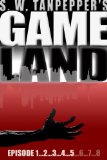
In April, 2012, I purchased GAMELAND Episodes 1-8 for the Kindle. Designed to be an eight episode serial, the experience has proved to a lot different than what either author Saul Tanpepper or customers like myself expected it to be. Because of this, I asked him to comment on his early experiences trying to publish a serial on Amazon before Kindle Serials and his thoughts on the new program . I thought his comments were important and interesting enough to post in their entirety as a guest post.

At a press conference on Thursday to introduce the new Kindles, Amazon’s CEO Jeff Bezos announced—almost as an afterthought—that their digital publishing arm Kindle Direct Publishing (KDP), will be offering a new kind of ebook product. Kindle Serials are book-length stories delivered to customers’ Kindle reading devices over a period of time. A customer buys into the concept early, pays once, and gets future installments without having to dish out any additional cash.

I admit, I have mixed feelings hearing this.

First off, let me just say that I’m thrilled Amazon is exploring this approach. The serialized novel is not a new concept, but rather a format whose popularity has been repeatedly demonstrated throughout publishing history and which only recently had fallen into relative obscurity. What I am unhappy about is how long it took Amazon to recognize this opportunity and to offer this publishing option to authors in the first place. Six months ago would’ve been nice. A couple years, even better. After all, digital content has been delivered serially for years; and yet, for some reason, books have not been included.

 It’s about time.

 I approached KDP back in early April of this year (it may actually have been sooner; I can’t remember and I just can’t be bothered to wade through all my emails) with the idea of offering a book to customers as a serial. As I envisioned (and explained to them), the idea would be that customers would only have to pay once and would get a steady stream of reading material over some set future period of time. Sort of like a magazine subscription, only with books.

Sorry, they told me. Not doable.

Instead, I was told to consider using their Blogs and ePeriodicals publishing program. What is this option? Basically, anyone with a blog can deliver their content to subscribers’ Kindles when it becomes available. The caveat? It has to be published on-line. For reasons that aren’t relevant here, this wasn’t a viable option for me.

Despite this setback, I set out to publish a serialized novel anyway. Without Amazon’s blessing, I signed customers up. How could I deliver on this promise? By publishing an ebook and updating it monthly with new content. This workaround was available to me only because Amazon permits customers to receive (at no extra charge) any updates to an ebook they have already purchased. (Generally, an author might update for reasons of formatting or editing, for example.) Unfortunately, updates aren’t automatic, and customers aren’t automatically notified of their availability.

Why not?

 Amazon is extremely resistant to notifying customers about updates and instead requires an author request the notification as well as to provide extensive details outlining the changes in the request. Updates, they say, must be “significant” in order to warrant a notification. The vagueness of this standard essentially means Amazon can decide to notify customers or not at its discretion.

To some degree, I understand their hesitancy. I know many authors who constantly fiddle with their books, rendering tiny changes on a regular basis. Amazon would spend a lot of time just notifying customers, and customers’ email inboxes would constantly be flooded with notices.

 But there are other, more practical, reasons why updates and notifications aren’t automatic. First off, while sending electronic files is extremely cheap, it isn’t free, and Amazon foots the bill. (The initial “transfer” fee following a purchase is charged to the author in most cases, but updates aren’t).

 Additionally, Amazon hasn’t yet figured out a way to update an ebook without a customer losing bookmarks, notes, and highlights. Consequently, when they notify customers of the availability of an update, or when a customer requests to receive an update, the customer must acknowledge that they understand that these things will be lost. Amazon says they’re working on this, and maybe the launch of Kindle Serials means a fix is close to being implemented.

Despite all this, I was determined to offer my urban thriller novel, GAMELAND, as a serial, and to allow customers the option of buying into the entire project early, something I had never seen before for an Amazon ebook. To incentivize customers to buy into the experiment (and because I was a relative unknown), I offered the “subscription” at a huge discount (over eighty percent off the individual episode price). What those first customers received in April, the month before the first episode was even released, was essentially a cover, a welcome note and instructions for updating the file. With each new episode, I raised the price. For latecomers, the package is still cheaper, and will always be, compared with buying the individual episodes (or even multi-episode packages).

 But there has been a tradeoff for early adopters: along with the savings, they’ve had to deal with the monthly hassle of Amazon updating reluctantly and notifying sporadically. But the end of this grand experiment is now in sight, if only because there are just three episodes remaining. The launch of Kindle Serials hopefully bodes well for future projects.

Will customers buy serialized ebooks?

 If GAMELAND is any indication, I think they will. My sales are still relatively small to be attempting to make grandiose generalizations, but the feedback has been nothing but positive. I can also say this with confidence: if my readers get half as excited as I do engaging in discussions about a story while it’s still being written, then they will buy into the idea of the serialized novel. Just imagine how much more popular this format will become once the obstacles are removed!

So, yes, I’m thrilled that Amazon has finally developed a process that enables authors to publish this way. But for me and my fans, it’s a bittersweet moment, the culmination of an arduous journey while simultaneously a validation that the journey itself was worthwhile. I have been blessed with readers whose enthusiasm is matched by their patience. I like to think that our struggle—and our combined and unrelenting dedication to the serial format—has finally made Amazon see the light.

In Part Three, we’ll discuss pricing and customer expectations about the serial format.

Kindle Serials (Part One)

In the midst of all the announcements about Amazon.com’s new family of Kindles was an unexpected tidbit: The announcement of Kindle Serials.

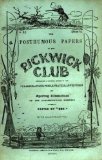
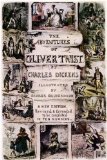
Now, serials are nothing new. Dickens did them (and Amazon is giving a couple of those away for free  to celebrate the new program). Many of my favorite classic sci-fi novels started as serials back in the days of the pulps. Back in 1996, Stephen King  resurrected the serial form with his Green Mile series, with rival John Saul penning The Blackstone Chronicles shortly thereafter. (And, just for the record, I bought both of them….)

Tor Books recently garnered headlines  by announcing that they were going to be serializing the next installment in John Scalzi’s Old Man’s War series. In reality, however, small presses and authors have already been digitally serializing books for some time now–without the credit given to Tor and now, Amazon.

Just ask Kate Sullivan, editor-in-chief and the mastermind behind Candlemark & Gleam, a small press in Bennington, Vermont. Just be prepared to duck (digitally, of course). The normally good-humored Sullivan had a few things to say  about mainstream publishers taking the credit for being “unique” and “innovative” by publishing serial fiction. Candlemark & Gleam has been publishing it online for several years.

When asked about the Amazon announcement, Sullivan was more positive:

I’m choosing to look at the Kindle Serials announcement as a good thing. At Candlemark & Gleam, one of our earliest goals was to bring some classic publishing ideas back into practice; from the beginning, part of that involved working with serial fiction – one of our first titles, two years ago, was a serial. Serials were, for a very long time, a vibrant part of the publishing landscape, and also intimately connected with the world of science fiction and fantasy, which is obviously near and dear to us. Given that modern technology has made it simpler than ever to publish short works directed at a specific, interested audience, we figured that the time was right to push for serial fiction to come back. Unfortunately, since serials fell by the wayside in the latter part of the 20th century, it’s taken some doing to get people to understand what a serial even is, much less to understand the vagaries of how one might be delivered, or to buy in to the joys of delayed gratification. That’s been the biggest challenge facing our two serial projects thus far, and I think it’s a challenge that the prominence of Kindle Serials might help overcome. Say what you will, but Amazon has a lot of clout, and a lot of ability to push ideas into the mainstream. If Kindle Serials mean that more people are willing to give delayed gratification and serial stories a try, then hurrah!

What I’m most hoping for, though, is a simplification of the delivery process. Our two serials so far have been Hickey of the Beast, a YA fantasy by Isabel Kunkle, and Constellation Games, a “space opera soap opera” by Leonard Richardson. Both serialized as weekly emailed chapters initially, with Hickey of the Beast also available as an auto-updating iPhone and Android app, and both are now available in compiled form as both eBooks and paperbacks. When we were originally serializing the novels, they were pushed as emails to subscribers each week, with PDFs of each chapter available on a subscriber-only webpage. With the Kindle Serials plan, it’s possible that there will be a means for publishers and self-published authors alike to make serials available with each chapter auto-delivered to a subscriber’s Kindle device – much simpler than loading a PDF each week, and just as easy as opening an email on your smartphone. Between easing the delivery process and making readers aware of serials as a great option – just think about how much you look forward to each week’s installment of your favourite TV show! – there’s a good chance that Kindle Serials will inject some new life into a format that many of us have been struggling to revive.

I highly recommend reading Ralph Vicinanza’s fascinating introduction to the Kindle edition of The Green Mile for background on just how groundbreaking an idea it was to do a serialized print novel. If you don’t have the book, you can read the intro on the “Look Inside” feature here.

There’s so much to say about this subject that this is going to be a three part article. In Part Two, we will talk with author/publisher Saul Tanpepper about his experiences publishing his serial novel, GAMELAND on Amazon prior to the Kindle Serials program. In Part Three, we are going to look at pricing.

Judge approves price fixing settlement

I almost missed this one in my effort to follow all the new e-reader news today: Judge Cote approved the DOJ settlement with three of the so-called “big six” publishers.  Under the terms of the settlement, HarperCollins, Simon & Schuster and Hachette will no longer be using agency pricing.

You have to admire a judge who quotee Emily Dickenson in her ruling and reflects a certain amount of cynicism as well:

In another section of the decision, Judge Cote acknowledges that the vast majority of public comments in response to the settlement were negative. She adds, however, that some comments were “extreme” and sought to blame “every evil to befall publishing on Amazon’s $9.99 price for newly released and bestselling e-books, and crediting every positive event — including entry of new competitors in the market for e-readers — on the advent of agency pricing.”

Consumers who don’t like agency pricing (like myself) will see this as a decided victory. The  lawsuit against Apple and two other publishers, however,  has yet to go to trial.

Now, let’s see it the price comes down on Stephen King’s On Writing. Then, if only we can get them the government to work on the library lending issue, I’ll be a happy camper….

E-reader makes it to the dictionary…

According to this article,  Merriam-Webster added the word e-reader to their dictionary. Now, before you get all excited, thing about this: That also means there is now a proper and right way to spell it! No more make-up-your-own-mind choices like ereader or eReader.

Now, college professors, bosses and newspaper editors are all going to insist that the word is spelled correctly. And, horror of horrors, my blog tags and categories are no longer correct.

And here I was, hoping for a hyphen-free spelling solution….

The future of the library and the great content divide

As someone who tweets a great deal about public libraries, this article from TheDigitalShift, Ebook Strategy and Public Libraries: Slow Just Won’t Work Anymore,  speaks volumes.

The article addresses many of the important issues at the heart of the library ebook problem such as Overdrive’s monopoly and publisher’s refusals to sell ebooks because of fears of the library model. But it is the following paragraph which presents a truly terrifying scenario:

The perfect storm formula of a monopolistic environment and the actions (or more accurately, the deliberate inaction) of publishers have resulted in the creation of a significant shift in public policy in this country. After more than 100 years of public libraries circulating materials to users, we are no longer able to provide access to critical content that now exists in digital form. As a result, two very distinct scenarios are emerging in the communities we serve. Affluent users in prosperous neighborhoods have universal broadband access, numerous ebook hosting devices, and a credit card with the disposable income to acquire whatever content they want. Low-income residents in poorer neighborhoods do not have this sequence of resources and run the risk of not being able to access digital content that will allow them to fairly participate, compete and contribute to the digital economy/world. This content divide goes against the very principles that attracted so many of us to this profession –supporting democracy by providing access to information in the broadest possible context.

The issues so succinctly raised in this article are ones that all of us, as a society, should be very, very concerned about.There is much more in the full article, including suggestions about how to work towards a solution. If you care about public libraries, this is a must read article!

The Timed Reading Experience E-Book

Yesterday, on The Passive Voice, there was an interresting blog entry on TREEBook, a new eBook format that stands for Timed Reading Experience E-Book.  The format allows for the embedding of multiple storylines based on readers’ actions and behavior.

The comments on this one are interesting. The idea seems to have left a bad taste for quite a few…. And, maybe I’m alone in this, but I think  something like this would drive me crazy as I would be constantly wondering what had been added or what I had missed. That’s hardly a recipe for a relaxing read.

Hey, Muggles! Soon, you can borrow Harry Potter on your Kindle!

Amazon announced today that all 7 Harry Potter books would be available in the Kindles Owners Lending library as of June 19, 2012.

According to Amazon’s press release:

 Owning a Kindle just got a whole lot better for magic-loving Muggles. Starting June 19, Amazon.com (NASDAQ:AMZN) is adding all seven Harry Potter books (in English, French, Italian, German and Spanish) to the Kindle Owners’Lending Library (KOLL). Harry Potter is the all-time best-selling book series in history, andAmazon has purchased an exclusive license from J.K. Rowling’s Pottermore to make the addition of these titles possible. The Kindle Owners’Lending Library is a benefit of Amazon Prime membership—Prime members also enjoy free two-day shipping on millions of items and unlimited streaming of more than 17,000 movies and TV episodes. The Kindle Owners’Lending Libraryhas now grown to over 145,000 books that can be borrowed for free as frequently as once a month, with no due dates.

“We’re absolutely delighted to have reached this agreement with Pottermore. This is the kind of significant investment in the Kindle ecosystem that we’ll continue to make on behalf of Kindle owners,” saidJeff Bezos, founder and CEO ofAmazon.com. “Over a year, borrowing the Harry Potter books, plus a handful of additional titles, can alone be worth more than the$79cost of Prime or a Kindle. The Kindle Owners’Lending Libraryalso has an innovative feature that’s of great benefit for popular titles like Harry Potter – unlimited supply of each title – you never get put on a waiting list.

This is an exclusive deal between Amazon and Pottermore.