 To celebrate his birthday today, Elvis’ #1 Hits album is free in the Google Play Music store. This album has 30 of his #1 hits. (This is a special Google Play Bonus Track Version)
Category Archives: Kitchen sink
Um … about that American Libraries article we wrote
I feel for the authors here and find it appalling that American Libraries would do this. Here’s my bit to help get the word out….

As a professional rule, I try to keep things positive. I like to be a cheerleader for all the great people out there and avoid boosting the signal on a bunch of negativity.
However, situations compel me to devote this one post to something totally crappy.
TL;DR: Patricia Hswe and I wrote an article for American Libraries and the editors added some quotes from a vendor talking about their products without telling us. We asked them to fix it and they said no.
Because American Libraries refused to clarify what happened, we decided to clarify it ourselves. What follows is our second (and hopefully happier) attempt at collaborative writing. This little blog does not have quite the reach of that big glossy magazine so please feel free to share as widely as you want. As always, let me know if you have any questions!
svarner@email.unc.edu || @stewartvarner
***
If you are a member of…
View original post 1,181 more words
Why That Ebook May Cost More Than The Hardcover
Interesting article. I find myself passing on more and more books from big publishers due to price. Not paying $13-15 for a license to read a book – ones you don’t own, can’t lend, etc.
Chain, Chest, Curse: Combating Book Theft in Medieval Times
As both a student of medieval studies and avid e-reader enthusiast, I found this one fascinating….

Do you leave your e-reader or iPad on the table in Starbucks when you are called to pick up your cup of Joe? You’re probably not inclined to do this, because the object in question might be stolen. The medieval reader would nod his head approvingly, because book theft happened in his day too. In medieval times, however, the loss was much greater, given that the average price of a book – when purchased by an individual or community – was much higher. In fact, a more appropriate question would be whether you would leave the keys in the ignition of your car with the engine running when you enter Starbucks to order a coffee. Fortunately, the medieval reader had various strategies to combat book theft. Some of these appear a bit over the top to our modern eyes, while others seem not effective at all.
Chains
The least subtle but most effective way to keep your books safe…
View original post 1,207 more words
Changing Formats: From Scroll to Codex to eBooks
This is a lovely piece on changing formats!

Changing Formats: From Scroll to Codex to eBooks
by Jack Lyon
Electronic reading devices abound. There’s the Kindle, the Nook, the Kobo, and many, many more. Electronic formats abound. There’s EPUB, Plucker, Mobi, and many, many more. But for thousands of years, there was only one way to read a book: by unrolling a scroll.
Scrolls offered some big advantages over their predecessors, stone columns and clay tablets. They were easy to make, easy to write on, and didn’t weigh much. They were also compact, holding a lot of text in a relatively small space. But they had one big disadvantage: they could only be accessed sequentially. In other words, if you wanted to read the 77th column of text on a scroll, the only way to get there was to “scroll” through the first 76 columns. Remember the good old days of cassette tape players? If…
View original post 1,038 more words
Is The Book More Important Than The Text?
This is an interesting form over function argument that most of us who have transitioned to e-books have already come to terms with. Here, in true postmodernist fashion, the book has become an objet d’art. 🙂

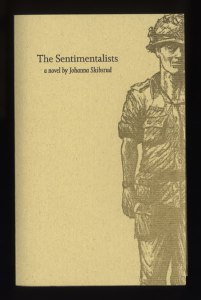 The major Canadian literary prize, the Giller, was won in 2010 by Johanna Skibsrud’s “The Sentimentalists”. This book was published by a small boutique outfit called Gaspereau Press and was available only in a small edition typical of small presses (they specialize in runs of between 400 and 4,000 copies). The Giller would generally add tens of thousands to sales and a number of larger publishers offered to print a large run. Gaspereau however refused all offers, dismissing Random House et al. as people he wouldn’t want to do business with, and strongly defending tiny quality print runs.
That is one part of an interesting story. The other came in an interview that the publisher at Gaspereau had on CBC Radio where it was noted that Gaspereau has made an e-Book version of “The Sentimentalists” available to anyone online. The publisher dismissed that as merely “the text,” comparing it…
View original post 122 more words
The superiority of eBooks over paper books
Ha! John L. Monk wrote a funny piece on E versus P-books and why you should buy his e-book. It is a funny read (and great book). You can also read my review of the book on my personal blog at glindaharrison.com, 🙂

A quick disclaimer before I get started. I wrote and published “Kick” as an eBook, and though I have plans to release it as a physical, paper book, for now it’s available in digital format only (wherever eBooks are sold! Except Sony!). So it could be construed that the following list of pros and/or cons is somehow self-serving, and designed for the sole purpose of funneling sales to my book, “Kick” (just follow the links over on the right for 260 pages of raw, sugary joy).
For the record: no, I’m not trying to steer sales to what may or may not be one of the greatest novels in the history of Western Civilization, and which can be purchased today, this very second, for $2.99 in digital format (while supplies last).
All that said, here’s why digital books are far superior to moldy old traditional books:
- It’s a little known…
View original post 326 more words
Anyone else have a problem with Canadian/UK spelling?
American versus Canadian/UK spelling – What do you think?
I tend to get confused if I don’t know going in. And sometimes, as Steve Vernon points out, trying to turn Canadian spelling in to what we are used to in the US makes it even more complicated. What’s your preference?

So what is wrong with this cover?
 Some folks might say it is the spelling.
We Canadians have certain ways of spelling words.
What an American might call a “harbor” we call a “harbour”.
It isn’t pronounced ANY differently but we’ve got that darned letter “u” stuck there in the middle of it.
Speaking of middle if you row out into the heart of an American harbor you are probably at the center of things – but if you row out into the heart of a Canadian harbour you will find yourself at the centre.
Is this making sense?
Let us say that you are out there in the center of that American harbor and you wanted to practice up on your home surgery techniques – well, you might want to indulge in a little American anesthesia.
While, if you are practicing up on that Youtube video of “How…
View original post 234 more words
A deal on e-book Westerns
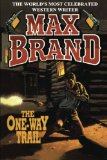 If you or someone you know is an avid reader of e-book Westerns, Amazon has a great deal going on you may be interested in. Until October 23, 2014, you can choose from 201 Westerns on sale for only $1.99 each. Authors include some of the greats in the genre: Louis L’Amour, Zane Grey, Max Brand, Ernest Haycox, Will Henry, Cotton Smith and many more.
Who is still blocking text-to-speech access?
This is a timely post by Bufo Calvin. A lot of people, myself included, were disappointed when the list of features on the new Kindle Voyage ereader made it clear that it would NOT include text-to-speech (TTS) access. It is clear from many of the forums I read that the TTS function is a feature that many Kindle owners still want.

Who is still blocking text-to-speech access?
A Kindle with text-to-speech access can use software to read aloud any text downloaded to it…provided that the ability to do that is not blocked by the publisher inserting code into the file which prevents it.
I haven’t written much about this in a while (although it still comes up), but it is an important issue to me. I believe that blocking the access disproportionately disadvantages the disabled. Personally, I don’t get books which have the access blocked, and I don’t intentionally link to books with the access blocked in the blog (I don’t want to give the publisher money on books where that decision has been made, and I don’t want to benefit from it by people clicking on the link in my blog).
However, I do believe this is a personal decision, and there are good arguments for supporting the author by…
View original post 1,027 more words
 The eBook Evangelist