Kindle Serials (Part One)

In the midst of all the announcements about Amazon.com’s new family of Kindles was an unexpected tidbit: The announcement of Kindle Serials.

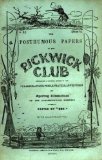
Now, serials are nothing new. Dickens did them (and Amazon is giving a couple of those away for free  to celebrate the new program). Many of my favorite classic sci-fi novels started as serials back in the days of the pulps. Back in 1996, Stephen King  resurrected the serial form with his Green Mile series, with rival John Saul penning The Blackstone Chronicles shortly thereafter. (And, just for the record, I bought both of them….)

Tor Books recently garnered headlines  by announcing that they were going to be serializing the next installment in John Scalzi’s Old Man’s War series. In reality, however, small presses and authors have already been digitally serializing books for some time now–without the credit given to Tor and now, Amazon.

Just ask Kate Sullivan, editor-in-chief and the mastermind behind Candlemark & Gleam, a small press in Bennington, Vermont. Just be prepared to duck (digitally, of course). The normally good-humored Sullivan had a few things to say  about mainstream publishers taking the credit for being “unique” and “innovative” by publishing serial fiction. Candlemark & Gleam has been publishing it online for several years.

When asked about the Amazon announcement, Sullivan was more positive:

I’m choosing to look at the Kindle Serials announcement as a good thing. At Candlemark & Gleam, one of our earliest goals was to bring some classic publishing ideas back into practice; from the beginning, part of that involved working with serial fiction – one of our first titles, two years ago, was a serial. Serials were, for a very long time, a vibrant part of the publishing landscape, and also intimately connected with the world of science fiction and fantasy, which is obviously near and dear to us. Given that modern technology has made it simpler than ever to publish short works directed at a specific, interested audience, we figured that the time was right to push for serial fiction to come back. Unfortunately, since serials fell by the wayside in the latter part of the 20th century, it’s taken some doing to get people to understand what a serial even is, much less to understand the vagaries of how one might be delivered, or to buy in to the joys of delayed gratification. That’s been the biggest challenge facing our two serial projects thus far, and I think it’s a challenge that the prominence of Kindle Serials might help overcome. Say what you will, but Amazon has a lot of clout, and a lot of ability to push ideas into the mainstream. If Kindle Serials mean that more people are willing to give delayed gratification and serial stories a try, then hurrah!

What I’m most hoping for, though, is a simplification of the delivery process. Our two serials so far have been Hickey of the Beast, a YA fantasy by Isabel Kunkle, and Constellation Games, a “space opera soap opera” by Leonard Richardson. Both serialized as weekly emailed chapters initially, with Hickey of the Beast also available as an auto-updating iPhone and Android app, and both are now available in compiled form as both eBooks and paperbacks. When we were originally serializing the novels, they were pushed as emails to subscribers each week, with PDFs of each chapter available on a subscriber-only webpage. With the Kindle Serials plan, it’s possible that there will be a means for publishers and self-published authors alike to make serials available with each chapter auto-delivered to a subscriber’s Kindle device – much simpler than loading a PDF each week, and just as easy as opening an email on your smartphone. Between easing the delivery process and making readers aware of serials as a great option – just think about how much you look forward to each week’s installment of your favourite TV show! – there’s a good chance that Kindle Serials will inject some new life into a format that many of us have been struggling to revive.

I highly recommend reading Ralph Vicinanza’s fascinating introduction to the Kindle edition of The Green Mile for background on just how groundbreaking an idea it was to do a serialized print novel. If you don’t have the book, you can read the intro on the “Look Inside” feature here.

There’s so much to say about this subject that this is going to be a three part article. In Part Two, we will talk with author/publisher Saul Tanpepper about his experiences publishing his serial novel, GAMELAND on Amazon prior to the Kindle Serials program. In Part Three, we are going to look at pricing.

Hey, Muggles! Soon, you can borrow Harry Potter on your Kindle!

Amazon announced today that all 7 Harry Potter books would be available in the Kindles Owners Lending library as of June 19, 2012.

According to Amazon’s press release:

 Owning a Kindle just got a whole lot better for magic-loving Muggles. Starting June 19, Amazon.com (NASDAQ:AMZN) is adding all seven Harry Potter books (in English, French, Italian, German and Spanish) to the Kindle Owners’Lending Library (KOLL). Harry Potter is the all-time best-selling book series in history, andAmazon has purchased an exclusive license from J.K. Rowling’s Pottermore to make the addition of these titles possible. The Kindle Owners’Lending Library is a benefit of Amazon Prime membership—Prime members also enjoy free two-day shipping on millions of items and unlimited streaming of more than 17,000 movies and TV episodes. The Kindle Owners’Lending Libraryhas now grown to over 145,000 books that can be borrowed for free as frequently as once a month, with no due dates.

“We’re absolutely delighted to have reached this agreement with Pottermore. This is the kind of significant investment in the Kindle ecosystem that we’ll continue to make on behalf of Kindle owners,” saidJeff Bezos, founder and CEO ofAmazon.com. “Over a year, borrowing the Harry Potter books, plus a handful of additional titles, can alone be worth more than the$79cost of Prime or a Kindle. The Kindle Owners’Lending Libraryalso has an innovative feature that’s of great benefit for popular titles like Harry Potter – unlimited supply of each title – you never get put on a waiting list.

This is an exclusive deal between Amazon and Pottermore.

News Bits and Bytes for February 9, 2012

Lots of news happening today:

Reports are saying that E-ink revenues are down for the month of January. A lot. However, downloads of digital media jumped in 2011. 

A big shake-up in the library lending world today. Penguin is terminating their agreement with Overdrive to supply library books. With Harper Collins still only offering libraries the crippleware 26 loan contract for books, Random House is essentially the only Big Six supplier of library books. If you pay attention to the subtext in the article about the meeting between publishers and the American Library Association, this should not come as too much of a surprise, unfortunately.

If you have been following the reaction to Amazon’s foray into the publishing world, the responses are still coming in. Today, Indie Commerce joins Barnes & Noble, Books-A-Million and Indigo in boycotting Amazon titles. Interestingly, this article from Paid Content says they’re not – well not exactly, that is.

Mike Shatzkin has a very thoughtful take on the Amazon vs Barnes & Noble saga that I highly recommend reading!

And finally, from  Evo Terra (Podiobooks) and Jeff Moriarty’s “It Isn’t Rocket Surgery” broadcast, a rather extreme point of view on the quality of self-published ebooks on Amazon.com. Here’s the video:

Penguin Restores Access to Library Books, but…

My, how one day changes things! Penguin has restored access to Kindle versions of their ebooks, but still has concerns, including some that (surprise) need to be worked out with Amazon.  New ebook titles are still not available in OverDrive.

But now, Random House has announced that it is reviewing its own library ebook policies.

As the story evolves, Twitter users are labeling Tweets about the issue with the hashtag #penguinod.

Yesterday (Tuesday) was a day of a lot of speculation on possible reasons for Penguin’s actions. It was also a day of reactions from both librarians and patrons.

An article in the Library Journal’s Digital Shift detailed how complaints from angry patrons surprised librarians who had no advance warning that the books were being pulled. The tension between Penguin and Amazon, along with a past history of difficult negotiations is also cited in the article as a possible reason for the books’ removal from the OverDrive System.

OverDrive’s initial announcement mentioned “security concerns” with the ebooks. The Digital shift article also reported that patrons has stated that, at least in some incidences, books are remaining on the patrons’ Kindles after the lending period is over.

And from Paid Content, there’s a thoughtful article by Laura Hazard Owen that offers answers to its own questions in  Why Might a Publisher Pull Its E-Books From Libraries?

In a piece from Teleread, InfoDocket’s Gary Price points to a February 2011 letter by OverDrive CEO Steve Potash  published on Librarian by Day as a possible explanation for Penguin’s actions:

In addition, our publishing partners have expressed concerns regarding the card issuance policies and qualification of patrons who have access to OverDrive supplied digital content. Addressing these concerns will require OverDrive and our library partners to cooperate to honor geographic and territorial rights for digital book lending, as well as to review and audit policies regarding an eBook borrower’s relationship to the library (i.e. customer lives, works, attends school in service area, etc.). [EMPHASIS ADDED] I can assure you OverDrive is not interested in managing or having any say in your library policies and issues. Select publisher terms and conditions require us to work toward their comfort that the library eBook lending is in compliance with publisher requirements on these topics.

When this letter was originally written back in February during the licensing change demanded by Harper Collins, it seemed that this paragraph seemed squarely directed at concerns over libraries like The Free Library of Philadelphia.

Long before the Kindle allowed library lending, the Free Library had long been discussed on sites like Kindleboards.com and the MobileRead.com forums as a source of library ebooks. The library allowed out-of-state residents to get a library card for a fee.  Users could then use their computers and the OverDrive system to access the ebooks.

Because of its large collection, the Free Library has been very affected by loss of Penguin ebooks and is keeping its patrons updated on its blog.

This whole situation is making it confusing for consumers who have bought or were planning to buy ereaders as gifts for the holidays. The prices of Kindles have come down significantly ($79 for the entry-level e-ink,  $199 for the Kindle Fire). But many consumers have been adamant that lending and library books are an essential part of the equation.

Competitor Barnes and Noble has already announced that its Simple Touch Nook will be only $79 on Black Friday. Kobo is selling its Touch at more retail stores and plans to offer wi-fi Kobo readers for only $59. Ereaders and tablets will likely be big sellers this holiday season.

Sarah from the Smart Bitches, Trashy Books blog did a nice write-up on this whole situation yesterday and summed it up succinctly: ” Holy crap in a sidecar, you cannot make up lunacy this frustrating. I need to read a romance. STAT.”

Yeah, Sarah, save one for me. I am sure we haven’t heard the last of this….

Did Jeff Bezos say millions?

Amazon released a statement announcing the Q3 earnings today. Net sales were up 44% to 10.88 billion dollars.

From the press release:

“September 28th was the biggest order day ever for Kindle, even bigger than previous holiday peak days – we introduced Kindle Fire for $199, Kindle Touch 3G for $149, Kindle Touch for $99, and our all new Kindle for only $79,” said Jeff Bezos, founder and CEO of Amazon.com. “In the three weeks since launch, orders for electronic ink Kindles are double the previous launch. And based on what we’re seeing with Kindle Fire pre-orders, we’re increasing capacity and building millions more than we’d already planned.”  [Emphasis added]

“Millions,” he said. That’s a lot of tablets. Already the rumors are starting that the Kindle Fire will outsell the iPad 2. And don’t forget the huge sales of the new Kindles.

But, ironically, investors weren’t happy because net sales were predicted to reach 10.95 billion – and didn’t. I guess you really can’t please everybody.

Amazon Press Conference Coverage

Amazon’s Press Conference at Stage 37 in New York is scheduled to begin at 10 AM, eastern time.  If you are as eager as I am, here’s a guide to those who are live blogging the event:

Len Edgerly of The Kindle Chronicles will be live blogging for Kindle Nation Daily at http://bit.ly/LEN-LIVE-FROM-NY-ON-KTAB.

CNET’s David Carnoy will be live blogging for the tech site at 10AM at http://reviews.cnet.com/8301-33198_7-20112398-286/amazons-press-event-wed-7-a.m-pt-live-blog/?tag=mncol;txt.

Harry McCracken will be covering the event for Technologizer at http://technologizer.com/amazon/.

BGR will be covering the event at http://www.bgr.com/2011/09/28/live-from-amazons-kindle-fire-tablet-event.

Find any more? Please leave them in the comments.