Are you having a problem reading?

books-1082942_640I ran across this article on Medium by Hugh McGuire, Why can’t we read anymore? Or, can books save us from what digital does to our brains? At first, I thought it was your typical print book versus ebooks screed. It turns out, its not, but I am not exactly sure what it actually is….

Last year, I read four books.

That’s a strange statement from the man who started LibriVox and Pressbooks, but there it is. He goes on to talk about concentration, digital distraction, dopamine and essentially digital addiction (without actually calling it by that name). He quotes a neuroscience study on multitasking (which turned out to be from a paid PR post).

His ultimate conclusion as to why he can’t read books:

  1. I cannot read books because my brain has been trained to want a constant hit of dopamine, which a digital interruption will provide

  2. This digital dopamine addiction means I have trouble focusing: on books, work, family and friends

Oh, yeah, and television is a problem, too.

McGuire goes on to talk about how he solved his problem, he can read again and it’s wonderful, etcetera….  And, BTW, he’s also starting an email newsletter about books that we can sign up for.

So here’s my confusion: I get that digital addiction is a real thing and that he had a problem with it. But that doesn’t mean that WE can’t read anymore. And I certainly don’t get how books are going to save US from what digital does to OUR brain. What is the benefit of turning what obviously is a personal issue into an TL;DR allness statement that claims-to-be-but-isn’t-really about the nature of books and reading? How is this OUR problem?

Somehow, I manage to muddle along, work on a computer all day, check my email and social media, watch an couple of hours of TV daily, write, blog, podcast and still read more than a hundred books a year. All digital books, too. And I am sure I am not alone.

How about you? Are you having a problem reading?
Can we finally kill Hello Dolly?

1024px-Louis_Armstrong_restoredRight at this moment, I would love to writing new posts for this blog. Instead, I am going through each of my WordPress themes and deleting the plugins that get re-installed EVERY TIME that you update the software – most specifically, the Hello Dolly plugin.

In case you have never bother to activate it, all Hello Dolly does is display a random lyric from the song Hello Dolly. Yes, that’s it. But it has traditionally been included with WordPress since earlyin the software’s development.

A lot of blog posts have been written about this over the last few years (Google delete Hello Dolly plugin and see what I mean). One post refereed to Hello Dolly as “some kind of zombie plugin that would rise from the dead every time I updated WordPress.”

While some people have learned to write plugins through studying the Hello Dolly plugin, more people seem to be frustrated with its continual ressurection. In this 2009 poll from Digging into WordPress, 78% of those who responded voted to remove Hello Dolly from WordPress. And yet it is still here.

Hello Dolly was written by Matt Mullenweg, one of the co-founders of WordPress, and that is probably the reason it remains bundled with the software. In fact, this post from Webnovate suggests that we should keep the plugin installed as a thank you to Matt Mullenweg for WordPress itself.

But there are actually some very good arguments for deleting it, along with any other unused plugins:

  • Plugins use server resources. They also affect your pages’ load times.
  • Plugins can interact and cause conflicts and unintended side effects.
  • Plugins require constant updating, even if they are not active.
  • Plugins can be huge security risks. Sometimes, the risk is from the plugins themselves, sometimes, it is from plugins being out of date.  According to WPExplorer, “Out of date plugins are prime targets for those in search of security weaknesses and can also break when newer versions of WordPress and other plugins are released.”

I use security software to track login attempts on my blogs. Every time WordPress updates, there is a surge in bots trying to access sites, hoping to catch a new vulnerability or exploit a flaw brought about by the new software. Given the security risks that are out there, I don’t want any plugins installed that I am not actively using.

And that’s why I think it is time for Hello Dolly to finally stop being bundled with WordPress. It is too big of a security risk for the world we live in. I know the song says, “Dolly’ll never go away again.” But, hopefully, we are not taking that too literally. I’d rather spend my time doing something else….

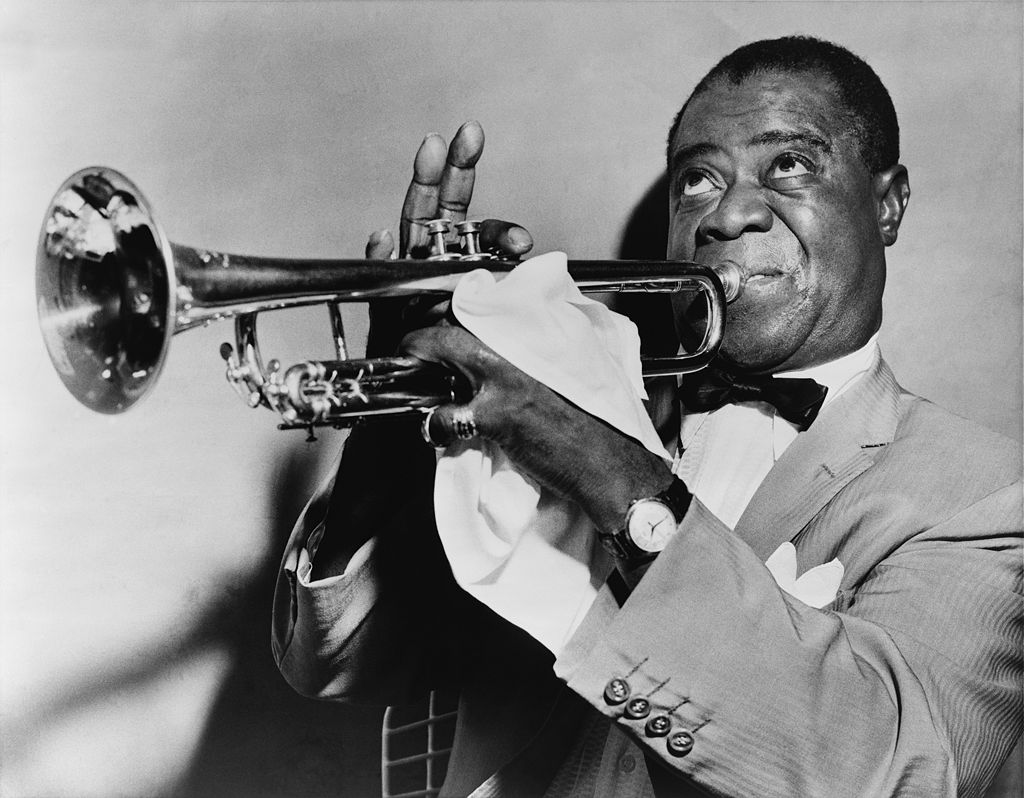
Louis Armstrong Image from Wikipedia Commons

Which is it: e-book or ebook?

Letter eI am in the midst of writing an article and got distracted by how to spell the word e-book. I tend to use e-book because that is what I thought the dictionary said to use. After all, e-reader is correct. Many online publications, especially British ones, just use ebook. The article I am quoting from just uses ebook.

I went back again to check the dictionary, hoping there had been a change. No luck . The Oxford says e-book.  Merriam-Webster also says e-book. Confusingly, Dictionary.com gives both spellings, along with my personal favorite, the camelback style, eBook.  And, according to Grammar Girl, the AP style guides says e-book.

So I find myself in the awkward position of either having to correct the original copy if I use e-book, use [sic], or have mixed styles on the blog post. Or, I can just give in and write ebook like every other blog I read.

*Sigh*

Which form do you use?

The Mother’s Day that changed my life

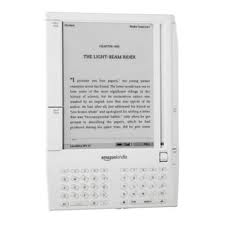
Kindle 1Happy Mother’s Day to everyone!

Now, you may be asking, “What does Mother’s Day have to do with a blog about e-books and the digital life?” Actually, it turns out, quite a bit.

In 2008,  at my request,  my husband and children bought me one of the first generation Kindles as an early Mother’s Day present. I am not exaggerating when I say that that gift changed my life. Back in 2011, I started an e-book blog. Obviously, I wasn’t ready to be serious about blogging. It only lasted for two blog entries, LOL! But in the first entry on that blog, I shared my feelings about my first Kindle.

Here is an excerpt from that first e-book blog entry:

At the end of April, 2008, I got my first Kindle. It cost $400.00 and it totally changed my life.

I had been a avid reader since childhood, but my vision was starting to deteriorate. I had seriously minimized my reading due to the headaches and discomfort that it caused.

People who hear me talk about eReaders now would be very surprised to learn how I struggled with the decision to buy that first device. Like many avid readers, I too loved the physicality of the reading experience, the touch and the feel of a book. But, at the end of the day, it all boiled down to the fact that I was just tired of not being able to read.

I was also worried about the technology quickly becoming obsolete. I have been an early adopter of various tech devices before and know how quickly that it can change. I lived on Amazon’s Kindle forums for a while, and listened to the experiences and the stories that users told. (As I recall, at that time, the first wave of Kindles had sold out and the second wave was ready for shipping.)

I really was like a kid in a candy store in the first days with my new Kindle. It only took a few minutes to get the operations down. I then started loading up the device with many of my favorite books. I bought digital versions of all of Anne McCaffrey’s books.  I re-read Mark Twain’s A Connecticut Yankee in King Artur’s Court and Edgar Rice Burroughs’ Tarzan. I discovered horror writer Scott Sigler. In short, I was in heaven because I could read again! And I haven’t really looked back.

Even though I have now had surgery on both my eyes, my vision is still somewhat impaired and I no longer read print books.  I have gone on  to own almost every Kindle model available as well as many other e-readers. I own several Nooks and other brands, but I always come back to the Kindle because of the ease of use. These days I use a Kindle Paperwhite for my everyday reader.  My husband even has one of his own now.

But I still have that first, original Kindle. And, yes, it still works, although some of the newer e-books don’t display correctly on the device. The original came with a removable battery and seven years later, I am on battery number two. The first one lasted for almost six years!

What has also lasted is the passion for e-reading that that first Kindle ignited in me. It has been nearly eight years since the first Kindle came on the market and went brought the concept of e-reading to the mainstream. It saddens me that there are still so many books not available in an e-book format.

Every time a well-known digital hold-out like Charlotte’s Web or To Kill a Mockingbird comes out as an ebook, someone says “All the important books are now available digitally.” Yet everyday, I find titles that are still not available as e-books. And some of the prices? YIKES! So no matter what anyone says, there are a lot of books that need to be digitized. Backlist digital pricing is still not reasonable. We still have more work to do….

So how about you? Ever have a tech gift that changed your life?

Print versus e-book: a look at the numbers

e-book infographicThere is a really interesting infographic on E-Books in America on dailyinfographic.com.  It gives a useful overview on formats and profiles of those who like to read e-books.

However, the part that I found fascinating was the part at the bottom on which format, print or e-book, is best. It shows the percentages where one format is preferred over another and for which activities. E-books win hands down for traveling and getting a book quickly. Print books dominate for reading with a child and on lending to others.  I was most surprised by the fact that reading in bed was pretty much a tie between the two formats. 🙂

I think the infographic confirms a lot of things those of us who read e-books already know: They make it easy to buy books and easy to carry them around with us. I also think that it is interesting to note that little sharing is done on e-readers – only 25% – mostly because publishers don’t allow us to do it! That number is actually higher than I would have imagined it to be.

Anything in the numbers that surprises you?


E-reader makes it to the dictionary…

According to this article,  Merriam-Webster added the word e-reader to their dictionary. Now, before you get all excited, thing about this: That also means there is now a proper and right way to spell it! No more make-up-your-own-mind choices like ereader or eReader.

Now, college professors, bosses and newspaper editors are all going to insist that the word is spelled correctly. And, horror of horrors, my blog tags and categories are no longer correct.

And here I was, hoping for a hyphen-free spelling solution….

Ebooks are too real books!

Finally!

It is always great to hear someone else say exactly what you thought about a subject.

When that video about books playfully moving around on the shelves was making the rounds on the social networks, I found myself getting furious every time I saw it. It was that ending screen that said “There’s nothing quite like a real book.”

What the heck? Since when are ebooks not “real” books? Isn’t it what’s in them that counts, at least with most books?

Needless to say, this article from Urban Times called “In Defense of the eBook” made my day. Check it out and let me know what you think. Do you get upset when people say ebooks aren’t real?

eBooks in the wild: the times, they are a-changing…

I bought my first Kindle in May of 2008. In the beginning, when I used to take it out with me, no one knew what it was.

During the following year and a half, the responses began to change to “Is that one of those eReaders?” or “Is that a Kindle?” Many people still went on to say that they had never actually seen one, but more and more people were familiar with what an eReader was.

Over this last week, I was at the hospital twice for some medical tests. Both times, members of the staff recognized the Kindle. One of the nurses was considering buying one for her daughter. One of the lab technicians even told me that one of her co-workers there at the hospital had a Kindle and she was thinking of buying her own.

I find these changes especially interesting, given the fact that here in Northwest Indiana, I have never actually seen anyone else with any type of an eReader when I have been out and about. What about you? Any eReader sightings in the wild?